
In-house laundry looks economical on a spreadsheet. In practice, most hotel and restaurant operators underestimate three costs that have nothing to do with the wash itself: the space, the people, and the risk.
The space problem
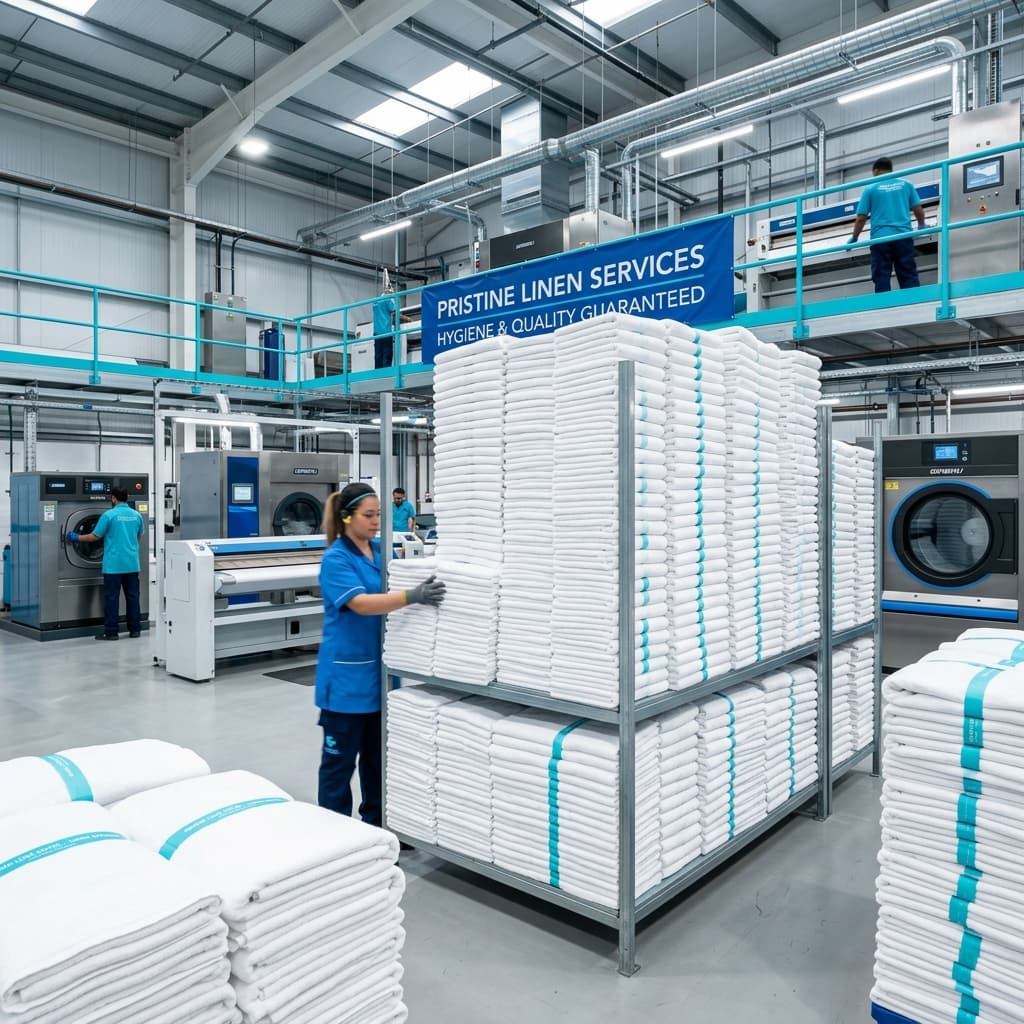
A 100-room hotel generates roughly 400–500 kg of soiled linen a day. Processing that volume requires industrial washers, dryers, flatliners and pressing equipment, plus the racks and holding area to move it. That is easily 400–500 square metres of plant room that could not be anything else. In a market where prime floor area is the scarcest resource a hotel has, giving up half a floor plate to a laundry operation is a real cost — even when the plant itself is capital.
The people problem
Running laundry requires a small specialist team: washers, ironers, finishers, a supervisor. In a tight labour market, those are difficult roles to fill and harder to keep. The moment your best presser leaves, your linen quality drops visibly within a single shift, and that drop is what your guests actually notice.
The risk problem
This is the one most operators underestimate. Your reputation is a function of what happens in the room your guests never see. A stain that comes back, a duvet that smells faintly of the wash, a pillowcase with a press mark — none of these generate a formal complaint, but collectively they show up as reviews that say the place was "fine but not quite".
Guests do not compliment a laundry service. They simply stop mentioning the problems, which is the highest praise a hotel can receive.
What outsourcing actually changes
- Predictable per-kilogram cost instead of fluctuating payroll, utilities and maintenance.
- Linens come back pressed to a consistent standard, because the pressing is not done by whoever is on shift.
- Fabric lifespan extends, because commercial machines use calibrated water and heat profiles rather than domestic cycles.
- Your team is freed up to do the work that generates revenue rather than wash laundry.
- Peak-season volume stops being a staffing crisis.
What to ask a provider before you sign
- What is the turnaround time, and what happens when a load is late?
- How are garments and linen segregated by fabric, colour and client?
- What is the escalation path when something goes wrong on a 400-room property?
- Do you carry professional indemnity and public liability cover?
- Can you handle a linen inventory audit before the first pickup?
The honest summary is that outsourcing converts a fixed, unpredictable, capital-heavy cost into a variable and predictable one — and, more importantly, converts it into a service level your operations team can actually manage.